

































Introduction
Mobile applications are no longer optional for businesses; they’re essential touchpoints for customers. Yet not all apps are created equal. Should you invest in a dedicated native app or develop a Progressive Web App (PWA) that runs in the browser? Both approaches have evolved rapidly, and each comes with benefits and trade‑offs. In 2025, the answer depends on your business goals, audience and budget. This article explores the differences between native apps and PWAs, highlights their pros and cons and provides a decision framework tailored for Australian businesses.
What are native apps?
Native apps are software applications built specifically for a platform such as iOS or Android. They are installed directly on a user’s device and offer superior performance, offline capabilities and deep integration with device hardware. Because they’re built in languages like Swift or Kotlin, native apps can use sensors (GPS, camera, accelerometer) with minimal overhead, making them ideal for resource‑intensive tasks and rich user experiences.

Advantages of native apps
- High performance and responsive UI: Native code runs directly on the device, delivering smooth animations and fast load times.
- Full offline functionality: Native apps can cache data and continue to function without an internet connection—useful for field services or travellers outside cellular coverage.
- Access to device features: Seamless integration with hardware such as cameras, GPS and biometric sensors enhances user experience.
Disadvantages of native apps
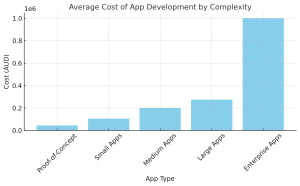
- Higher development costs: Creating separate versions for iOS and Android requires different codebases and increases maintenance.
- App‑store gatekeeping: Distribution depends on approval from Apple or Google, and updates often need user downloads.
- User adoption barriers: Users must search for, download and install the app before they can use it. Many potential customers simply won’t take that step, especially if they have limited storage or low interest in installing yet another app.
What are Progressive Web Apps?
PWAs are web applications that mimic native features. They run in a browser but can be saved to a home screen, work offline and send push notifications. PWAs use modern web technologies such as service workers and manifest files to achieve native‑like experiences. They’re platform‑independent, meaning a single codebase works on all devices.
Advantages of PWAs
- Lower development cost: A single codebase reduces engineering hours and budget.
- No installation required: Users can access a PWA immediately via a URL, reducing friction and improving discoverability.
- Instant updates: Changes on the server take effect immediately without requiring user action.
- Better SEO: Because PWAs are web pages, they can be indexed by search engines, improving visibility.
Disadvantages of PWAs
- Limited offline capabilities: PWAs use caching but can’t fully replicate the offline functionality of native apps.
- Performance limitations: They rely on browser capabilities, which can be slower for resource‑heavy tasks.
- Restricted access to device features: While APIs such as camera access are improving, PWAs still cannot utilise all hardware functions.

Native vs PWA: A 2025 comparison
| Feature | Native apps | Progressive Web Apps |
|---|---|---|
| Platform dependency | Built for specific platforms (iOS, Android) | Platform‑independent; runs in any browser |
| Performance | High performance; direct access to hardware | Dependent on browser performance; slower for complex tasks |
| User experience | Custom UI/UX tailored for each platform | Limited by browser and device capabilities |
| Offline functionality | Full offline support via local storage | Limited offline use through caching |
| Development cost | Higher cost due to multiple codebases | Lower cost; single codebase |
| App distribution | Requires app‑store submission and approvals | Accessible directly through a URL; no app store |
| Updates | Users must download updates via the app store | Updates occur instantly without user action |
| SEO visibility | Not indexed by search engines | Indexed by search engines; better for discoverability |
When to choose native apps
- Performance‑critical applications: Games, augmented reality (AR) experiences or complex multimedia applications perform best when built natively.
- Applications requiring offline access: Field‑service tools used in remote areas of regional NSW benefit from full offline functionality.
- Apps leveraging device hardware: Fitness trackers, navigation apps and apps requiring sensors (compass, barometer, biometric scanners) need native integration.
- Brand loyalty programmes: If you have a highly engaged user base and want to create deeper experiences—such as personalised push notifications or loyalty rewards—native apps offer more control.
When to choose PWAs
- Start‑ups and MVPs: For businesses testing a concept or minimum viable product, PWAs provide a cost‑effective way to reach users across platforms.
- Content‑driven platforms: News sites, blogs and e‑commerce stores (including those targeting the Australian market) can benefit from PWA features like offline reading and quick load times while still being indexable.
- Budget or timeline constraints: If resources are limited, building a single PWA can deliver a polished experience quickly.
- Desktop and mobile parity: When your audience seamlessly switches between desktop and mobile, a PWA provides a consistent experience.

Hybrid strategies and the rise of PWAs
In recent years, PWAs have matured. They now offer offline caching, push notifications, home‑screen installation and improved performance. Many organisations employ hybrid strategies, developing a PWA first and then investing in native apps once the market is proven. This approach reduces time‑to‑market and helps allocate budget based on real user feedback.
Furthermore, Progressive Web Apps are emerging as a hybrid solution that combines performance benefits of native apps with the accessibility of web apps. They leverage features such as service workers to provide offline capabilities, while still being delivered via the web.
Local considerations for Sydney businesses
Regulatory and data‑privacy requirements
Australia’s data‑privacy laws require stringent protection measures. If your app collects sensitive personal information—such as health data or payment details—native development may offer stronger on‑device security. However, PWAs can still meet compliance standards with appropriate encryption and secure data handling.
Connectivity across NSW
Rural and regional parts of New South Wales experience variable network coverage. Native apps with offline support may better serve users in those areas. But for urban centres like Sydney, where high‑speed internet is common, PWAs can deliver a seamless experience.
User expectations
Australians are heavy smartphone users, but they also value simplicity. For some services—like ordering takeaway or booking tradespeople—people may be reluctant to download an app if the process seems cumbersome. Offering a PWA can remove that barrier and increase conversions.
Search visibility
If your goal is to attract new customers via search, a PWA has a clear advantage. Because it is indexable, your content can rank in Google results, driving organic traffic. This is especially useful for businesses relying on SEO strategies to target the Sydney market.

Did you know?
- In 2024, Apple added support for Web Push on iOS, allowing PWAs to send push notifications directly to iPhones without requiring users to install an app. This breakthrough has made PWAs more attractive for businesses that rely on re‑engagement campaigns.
- The NSW Digital Restart Fund has invested over A$2.1 billion in technology projects, many of which use PWA architecture to deliver government services to citizens across the state.
- The European Union’s AI Act and Australia’s voluntary AI Safety Standard highlight the importance of ethical design and data governance. Even though PWAs are web‑based, they must still adhere to these emerging regulations when they incorporate AI or collect data.
Conclusion
Choosing between native apps and Progressive Web Apps in 2025 isn’t about picking a winner; it’s about aligning technology with your business goals. Native apps deliver the highest performance, full offline functionality and deep integration with device hardware—ideal for immersive experiences and mission‑critical tasks. PWAs offer accessibility, cross‑platform reach, lower development costs and SEO benefits.
For Sydney and NSW businesses, the decision often comes down to budget, audience preferences and regulatory considerations. Many companies start with a PWA to test the market, then invest in native apps as their user base grows. Whatever path you choose, prioritise user experience, ensure robust security and data privacy and remain adaptable—because in technology, evolution is the only constant.